Material holds texture;images preserve provenance.
This archive brings together museum photographs, collection images and original material published by cultural institutions. Each image is presented alongside its source as an object-based and historical reference for the digital exhibition above. Wutiku, Wayoukeyi and Wenta are project romanisations of names recorded in Chinese-language sources, with a plain-English description on first use.
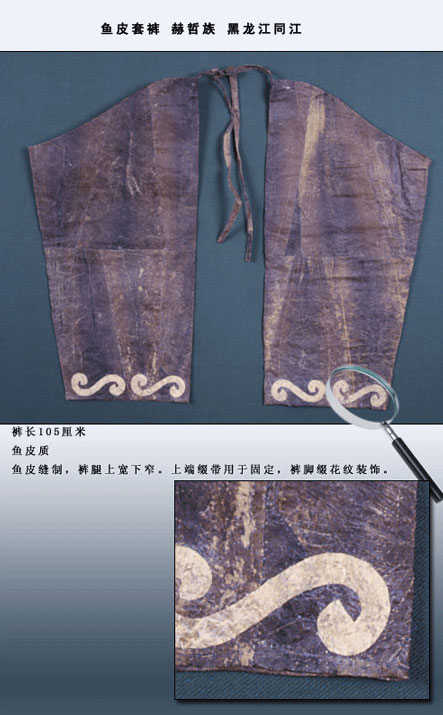
Fish-skin overleggings and an enlarged S-shaped hem motif
Object record · form and ornament
Wayoukeyi with cloud-scroll motifs
The published record identifies these men’s fish-skin overleggings as 105 centimetres long. Known in Hezhe as Wayoukeyi, the two separate legs are finished at the hem with pale S-shaped motifs. The enlarged detail shows the relationship between ornament, the surface of the skin and the stitched edge.
Source
China Ethnic and Religious Culture Network, “Hezhe Fish-skin Clothing”
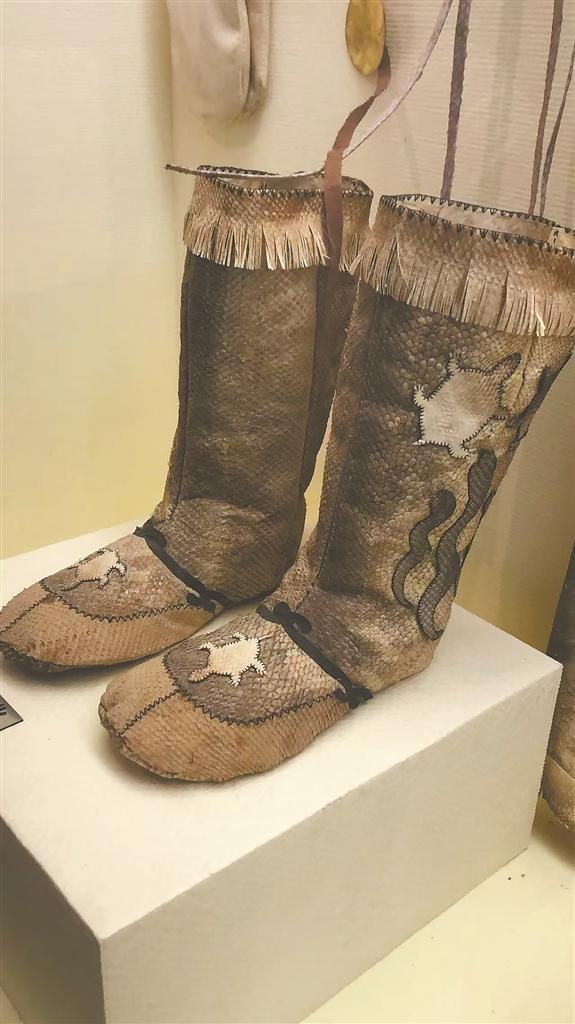
Traditional high boots photographed in a display case
Documentary image · traditional footwear
Scales, ties and boot shafts
The high boots retain the scale pattern of the material, visible seams, ties and pale appliqué. The museum view makes the relationship between shaft and foot clear, returning Wenta—the Hezhe name recorded for traditional fish-skin boots—to the scale and material detail of an actual display.
Source
Tencent News, “Decoding the Shared Cultural Heritage of Heilongjiang’s Ethnic Dress”
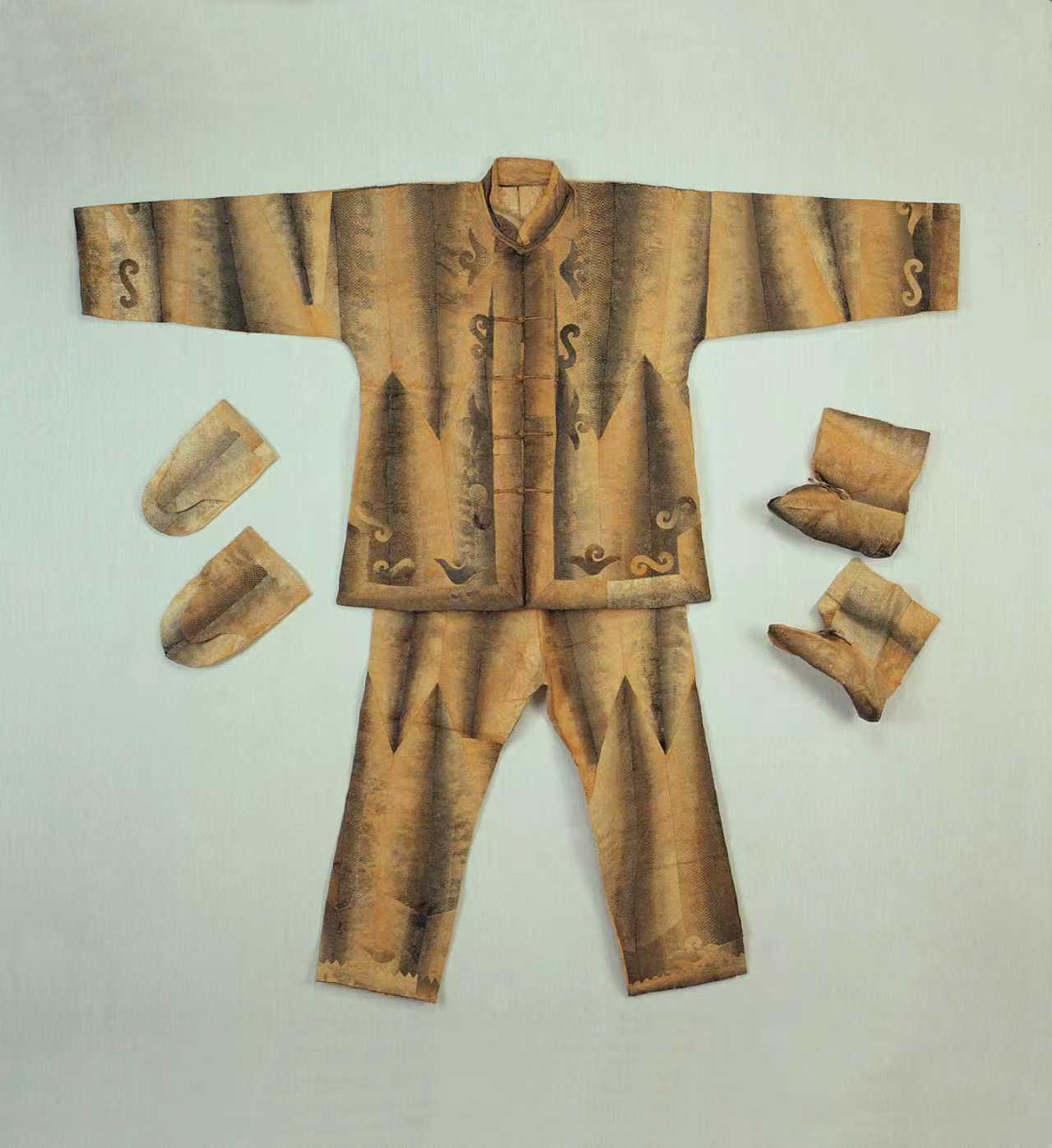
This display from the exhibition “Treasures of the Minzu Museum” brings together a coat, trousers, mittens and boots. Seen as a complete outfit, it shows how joined panels, bands of colour and edge motifs are distributed across the body, providing a material reference for the Wutiku and Wayoukeyi chapters above.
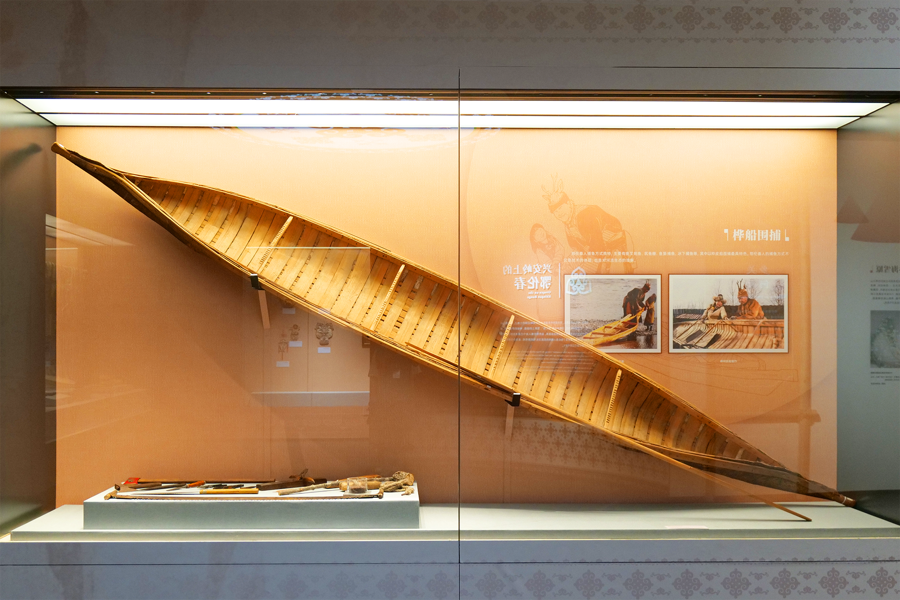
The canoe and tool display in the China Maritime Museum’s exhibition on the fishing cultures of China’s ethnic groups places each artefact within a wider system of river work. Fish-skin clothing was not an isolated form of decoration: it belonged to the linked practices of gathering material, preparing it, travelling by boat and living through northern winters.
Exhibition
“A Thousand Boats Arrive: Fishing Cultures of China’s Ethnic Groups”
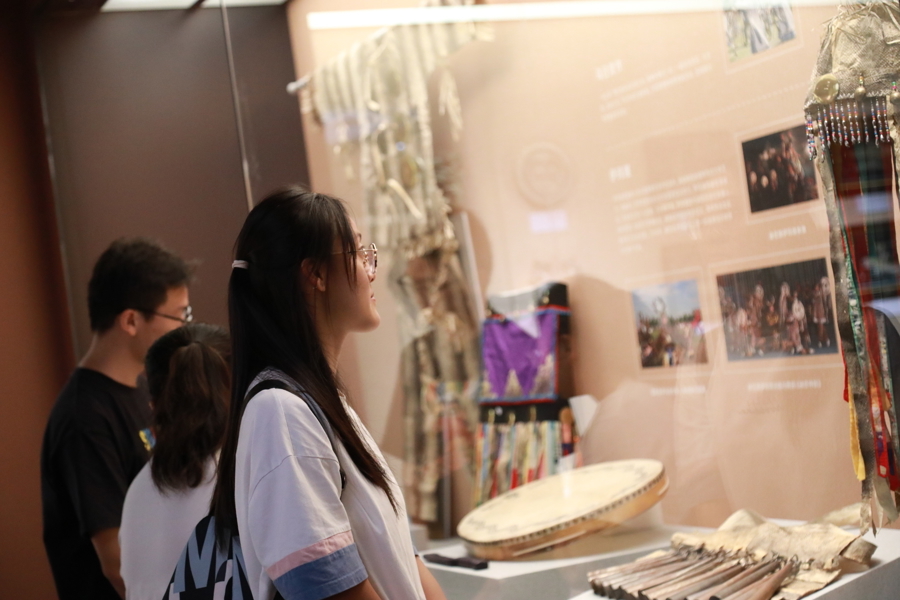
The same exhibition brings clothing, drums, working tools and documentary material into a public narrative. The distance between visitor and object records how fish-skin craftsmanship has travelled from lived practice to museum research and public learning, forming the final chapter of this Heritage Archive.
Exhibition
“A Thousand Boats Arrive: Fishing Cultures of China’s Ethnic Groups”